
Advancing Fertility Preservation Alongside Cancer Care
Cancer treatment can have lasting effects on fertility, even after menstruation returns. In his webinar, “Clinical Briefing: Advances in Oncofertility,” Prof. Meirow explained that this apparent recovery may mask a reduced ovarian reserve, leaving some survivors with less time to conceive.
Drawing on nearly three decades of experience, Prof. Meirow explored how fertility preservation can help cancer patients keep open the possibility of having children. At the time of the briefing, Sheba had performed 103 ovarian tissue transplants in 79 patients, with 55 pregnancies and 40 live births. Behind those figures are patients who returned after cancer treatment to build families—some having more than one child following transplantation.
Integrating Fertility Preservation Into Cancer Care
At Sheba, oncology, hematology and pediatric teams refer patients to fertility specialists who assess age, ovarian reserve, previous therapy and planned treatment. “We see them on the same day,” Prof. Meirow said, emphasizing the importance of timely consultation when cancer treatment may leave a narrow window for preservation.
Egg or embryo freezing may be possible within that window, although oncology patients often have time for only one or two stimulation cycles. For breast cancer patients, Prof. Meirow highlighted Sheba’s work on protocols addressing estrogen-related concerns and studies examining their oncological safety. Ovarian tissue preservation offers another approach, including for prepubertal children and selected patients unable to undergo conventional egg freezing.
The team also remains involved beyond the initial procedure. “We give the consultation, we perform the fertility preservation procedures and then we monitor the patients throughout the years,” he explained.
Preserving Fertility When Treatment Cannot Wait
Leukemia presents a particular challenge because treatment may need to begin immediately. Prof. Meirow described selected cases in which ovarian tissue was collected after initial chemotherapy and before stem cell transplantation. This timing allows the team to reassess preservation once the patient’s condition permits, taking account of treatment exposure, remaining ovarian reserve and disease status.
The possibility of malignant cells in the tissue also requires careful assessment before it can be returned to the patient. Sheba uses tissue examination, immunohistochemistry and molecular testing, with additional evaluation in selected high-risk cases. For leukemia survivors, this work helps determine whether transplantation can be considered; tissue with confirmed contamination requires alternative approaches.
Extending Expertise Beyond Sheba
Prof. Meirow also described Sheba’s training courses for clinicians, embryologists and scientists, sharing practical expertise in fertility preservation and ovarian tissue transplantation. These programs bring clinical decisions and laboratory techniques together, helping other teams develop the skills needed to offer this care.
His message also emphasized education: physicians need to recognize when fertility is at risk, and patients need the opportunity to discuss their options. Making that conversation part of cancer care can preserve possibilities that might otherwise be lost before a patient has the chance to consider them.
Watch Prof. Dror Meirow’s Webinar: Clinical Briefing: Advances in Oncofertility
More Posts
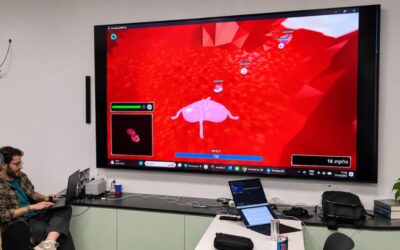
Sheba’s First ARC Healthcare Game Jam
At the first Sheba ARC Healthcare Game Jam, around 100 participants spent thirty hours developing games for patients, caregivers and clinicians. Projects explored challenges ranging from helping children swallow medication to easing hospital anxiety and supporting medical training.

Advancing HSCT for Rare Immune Disorders: Clinical Experience From Sheba
For children with rare inherited immune disorders, what Sheba learns from one transplant can change how the team approaches the next child with the same diagnosis. In a clinical webinar, Dr. Etai Adam shared the cases behind those decisions.

Advancing Gynecologic Oncology Through Clinical Innovation
At Sheba Medical Center, experience treating a large share of Israel’s gynecologic cancer cases informs advances in surgery and the organization of care. The department combines surgical innovation, remote monitoring and quality improvement with specialist training, using lessons from clinical practice to refine how care is delivered.
