
Bringing Families Into the Circle of Care: Sheba’s Parenting Clinic
Directed by Dr. Shirel Dorman-Ilan, the clinic offers care to parents of children and teens experiencing mental health challenges, many of whom arrive at the clinic having spent years feeling helpless in the face of their child’s struggles, after other treatment paths have been tried or refused.
The clinic’s clinical philosophy is made distinct by virtue of its location within the Edmond and Lily Safra Children’s Hospital. By treating parents as key agents in a child’s recovery journey, it is able to reach families that more conventional models leave without options. This same uncompromising clinical ambition has helped earn Sheba recognition by Newsweek as one of the World’s Best Hospitals for the past eight consecutive years.
A New Way to Begin Recovery
Dr. Dorman-Ilan’s team is experienced in helping families that have come to a dead end searching for effective pediatric psychiatric treatment; often, their child refuses therapy, cannot tolerate it, or is too withdrawn to participate meaningfully. Rather than give up on the potential for healing, the Parenting Clinic refocuses clinical efforts on the parents themselves, with the objective of changing the atmosphere in the home even if their child never sits on a therapy couch.
This approach is based on dialectical behavioral therapy (DBT), an innovative, evidence-backed protocol that in Israel has largely stayed confined to private practice. Additionally, Sheba has introduced DBT-based parent intervention methods into the public healthcare system, opening access to families who wouldn’t otherwise be able to reach this kind of specialized care. Parents move through structured groups together, rehearsing real situations from their own homes through role-play, while every session is recorded and reviewed by the clinical team, feeding directly into how the next group is run.

Taking Stock of Outcomes
The clinic treats its own model as something to be continually improved upon. Research based on data from the treatment programs themselves is used to advance the methods applied: each parent group runs roughly twenty participants through a structured cycle, with assessment questionnaires conducted at the beginning and end, in addition to follow-up care after the program’s end to check whether improvements are sustained.
What makes this line of inquiry unique is what it measures beyond the parents’ subjective feelings. Alongside parent-reported outcomes, an independent psychiatric professional rates the severity of each child’s psychiatric symptoms, without that child ever having received treatment directly.
The question driving the work is a pointed one: can meaningful, measurable change in a child’s symptoms come entirely through their parents? Preliminary findings indicate an answer in the affirmative, with improvements showing up not only in how parents regulate their own emotional responses, but in their children’s psychiatric symptoms as well.
Curiosity Applied to Conflict
One family treated at the Parenting Clinic experienced a series of challenges common to many parents of children with psychiatric disorders. Their son, a teenager on the autism spectrum, had fallen into a severe depressive state, withdrawn from school, ceased bathing, and shared that he had been thinking about harming himself. Rather than demanding he return to the standard school system, clinicians and his parents, working in sync, set a different goal: attaining part-time employment that aligned with his own interests in technology, which led to a position at a computer store.
The plan held until his manager raised a concern about hygiene, telling him it was affecting customers. He quit on the spot, leading his parents to feel frustrated with the perceived setback in his progress, and their relationship began to break down, with communication between them shutting off almost entirely.
With the help of the group-based intervention program, the teen’s parents were encouraged to try to address what was behind his issues, rather than be upset by their outward manifestation. That shift in approach eventually led their son to share that he was very physically sensitive to ordinary hygiene products, something they had previously had no idea of. His father took him to choose a deodorant he could actually tolerate, and the disconnection between them began to heal.
Another Starting Point for the Care Journey
The Parenting Clinic works from a premise that runs through both Sheba Psychiatry and the Edmond and Lily Safra Children’s Hospital more broadly: that meaningful care doesn’t always begin with the patient directly in front of a clinician. Innovation, rigorous research, and genuine partnership with families are all integral to the clinic’s mental health approach; that principle is what allows healing to reach children and their loved ones who might otherwise run out of options.
More Posts

From Clinical Care to Mental Health Research at Sheba Psychiatry
At Sheba Psychiatry, within Sheba Medical Center, recognized by Newsweek as one of the World’s Best Hospitals, mental health research is closely connected to clinical care. Prof. Mark Weiser, former Director of Sheba’s Division of Psychiatry, an active researcher, and professor of psychiatry, studies questions that emerge from treating patients and understanding their unmet needs.
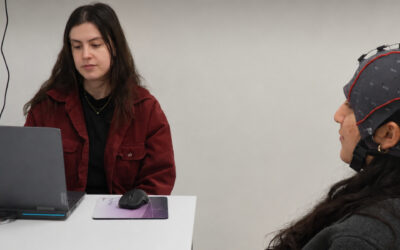
Sheba Psychiatry’s Innomind Lab: Using Innovation to Advance Patient Care
Sheba Psychiatry’s Innomind Lab turns emerging research and technology into practical tools that support more precise, personalized patient care.

CEO & Co-Founder of Mentaily Shares Insights From Sheba’s LIV
On July 15th, Sheba Global hosted a webinar titled LIV: Where AI Meets Mental Health, featuring Iris Shtein, CEO and Co-Founder of Mentaily. Shtein traced LIV’s development from a clinical concept inside Sheba Medical Center to a validated, deployed workflow component now used by hospitals, defense ministries, and healthcare systems internationally.
