
Sheba Partners with the U.S. National Institutes of Health to Establish a Pandemic Preparedness Research Institute
As COVID-19 began to spread in 2020, Sheba’s Infection Prevention and Control Unit was tasked with leading infection control efforts at Sheba. After recruiting almost 10,000 healthcare workers, Sheba ran long-term studies that provided insight into the efficacy of vaccines in preventing asymptomatic and symptomatic infections, immune responses, and much more.
These efforts culminated in 50 research articles published in renowned medical journals, such as The New England Journal of Medicine, The Lancet, Nature, and JAMA – impacting national decision-making.
Sheba Recognized the Need to Prepare for Future Pandemics
After the pandemic began its decline, Sheba recognized the need to prepare for future pandemics and decided to partner with the U.S. National Institutes of Health to establish the Sheba Pandemic Preparedness Research Institute (SPRI). The SPRI was tasked with developing medical advances and technologies for a rapid global epidemiological crisis response, focusing on preventive measures and biological countermeasures.
“The SPRI is a significant milestone in our ongoing efforts to prevent and combat future epidemics and pandemics,” explains Prof. Gili Regev-Yochay, Director of the Pandemic Research Institute & Infectious Diseases Unit at Sheba Medical Center. “Together with the NIH, we hope that the discovery of pathogens and infectious diseases can be translated into health outcomes that not only improve but protect the lives of patients worldwide.”
Pandemic Preparedness Research Institute Features a Multidisciplinary Team
Featuring a multidisciplinary team of virologists, immunologists, epidemiologists, clinicians, bioinformatics scientists, FACS experts, clinical study coordinators, and more, SPRI will leverage industry collaborations to complement the research and clinical capabilities of Sheba, the NIH, and other academic partners – accelerating the development of therapeutics and vaccines.
“The core of the National Institutes of Health and Vaccine Research Center mission is applying scientific and technological insights to design and develop vaccines and biologics against infectious diseases,” said Prof. Daniel Douek, Chief of the Vaccine Research Center’s Human Immunology Section at the NIH and newly appointed Senior Scientific Advisor of the Sheba Pandemic Research Institute.

More Posts
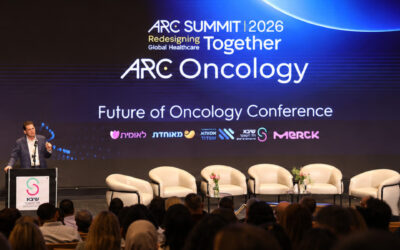
ARC Summit 2026: Redesigning Global Healthcare Together
From October 19 to 22, ARC Summit 2026 brought together hundreds of guests from 30 nations. Over the course of four days, international delegates gathered at ARC Innovation on Sheba Medical Center’s campus and attended workshops, receptions, and lectures across Tel Aviv. The main conference was held at the David InterContinental, where Sheba welcomed Israeli President Isaac Herzog for a special address.

A Global Standard for Patient-Centered Care: Sheba Becomes First in Israel to Earn ICHOM Accreditation
Sheba Medical Center is the first in Israel to earn ICHOM accreditation, awarded for its program measuring prostate cancer treatment outcomes by a standard used worldwide. Patients report how they feel and function through questionnaires completed at multiple time points before and after treatment, and during follow up. Based on their responses, real-time alerts notify the care team when follow-up or intervention may be needed.
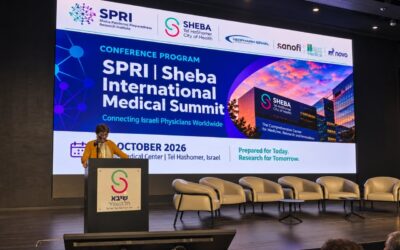
SPRI Summit 2026: Prepared for Today, Research for Tomorrow
Sheba Medical Center hosted the SPRI International Medical Summit on Sunday, October 25, 2026, connecting Israeli physicians worldwide through a program spanning pandemic preparedness, medical innovation and clinical research.
