
Sheba Medical Center Climbs to #8 On Newsweek’s World’s Best Hospitals List
Sheba Medical Center has again been recognized as one of the top hospitals in Newsweek’s prestigious World’s Best Hospitals 2025 ranking. This marks the seventh consecutive year Sheba has been featured on Newsweek’s distinguished list, reaffirming its global leadership in medical innovation, patient care, and advanced research.
Since 2019, Newsweek, in collaboration with Statista Inc., world-leading statistics portal and industry-ranking provider, has compiled this ranking based on recommendations from medical professionals, hospital quality metrics, patient experience surveys, and innovative treatment approaches.
The rankings feature top medical institutions from 30 countries, further solidifying Sheba’s standing as one of the global healthcare leaders and #1 hospital in Israel.
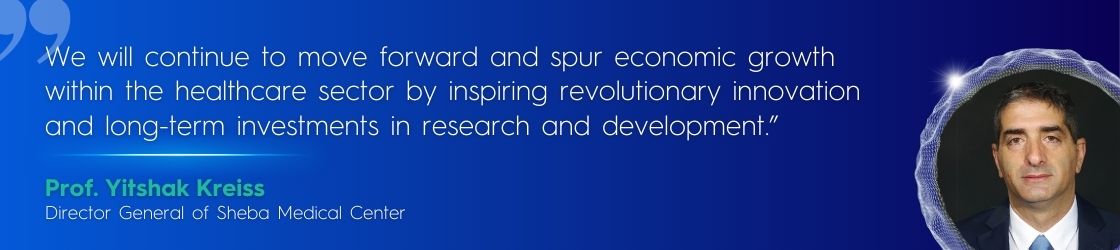
“As the flagship of the national healthcare system in Israel, it is incumbent upon us to offer the highest quality of medical care to the general public. We will continue to move forward and spur economic growth within the healthcare sector by inspiring revolutionary innovation and long-term investments in research and development.”
Prof. Yitshak Kreiss, Director General of Sheba Medical Center
A Legacy of Medical Excellence and Innovation
Sheba Medical Center is more than a hospital – it’s a City of Health, including six specialty hospitals and research institutes that place equal emphasis on prevention, treatment, and medical innovation. With advanced technology, interdisciplinary expertise, and a patient-centered approach, Sheba continues to contribute to the advancements of global healthcare.
In 2024, through its ARC Innovation Center, Sheba integrated cutting-edge medical technologies that improve diagnostics, treatment options, and patient accessibility, including:
- AI-Powered Diagnostics – Deploying an accelerated, AI-powered cancer diagnostics research platform to improve patient diagnosis, treatment, and outcomes.
- Neurofeedback Therapy – Utilizing MRI and EEG technology to explore new approaches in mental health care and stress management.
- Remote Patient Monitoring – Supporting home-based treatment with real-time tracking of vital signs through wearable technology and video consultations.
- Global Research Collaborations – Partnering with leading institutions to advance chronic disease management, personalized medicine, and digital health innovation.
- Virtual Reality Programs – Improving patient rehabilitation and physician training through immersive VR technology.

Innovative healthcare is an inseparable component of economic growth within the Israeli economy and plays a major role in regional growth and collaboration.”
Prof. Yitshak Kreiss, Director General of Sheba Medical Center
Through these initiatives, Sheba is contributing to the evolution of modern healthcare, ensuring that innovative treatments reach patients worldwide.
Continuing the Mission
Climbing to #8 on Newsweek’s global list reflects Sheba’s determination and resilience in a turbulent region, as well as a testament to Sheba’s indefatigable dedication to providing innovative healthcare to nearly 2 million people a year – Jews, Muslims, and Christians alike. With a focus on continuous improvement and global collaboration, Sheba strives to expand treatment possibilities and improve outcomes for patients worldwide.
More Posts

A Global Standard for Patient-Centered Care: Sheba Becomes First in Israel to Earn ICHOM Accreditation
Sheba Medical Center is the first in Israel to earn ICHOM accreditation, awarded for its program measuring prostate cancer treatment outcomes by a standard used worldwide. Patients report how they feel and function through questionnaires completed at multiple time points before and after treatment, and during follow up. Based on their responses, real-time alerts notify the care team when follow-up or intervention may be needed.

SPRI Summit 2026: Prepared for Today, Research for Tomorrow
Sheba Medical Center hosted the SPRI International Medical Summit on Sunday, October 25, 2026, connecting Israeli physicians worldwide through a program spanning pandemic preparedness, medical innovation and clinical research.

Sheba Medical Center Launches Free AI Chat for Cancer-Related Questions
The new 24/7 service offers patients and families access to cancer-related information based on a medically validated knowledge base, in multiple languages, as part of Sheba’s broader work in AI and digital health.
