
Israeli Innovation Reaches New Heights: Sheba Jumps to #6 in Newsweek’s World’s Best Smart Hospitals 2027
The achievement marks the sixth consecutive year that Sheba has ranked among the world’s leading hospitals for innovation, alongside renowned institutions such as Mayo Clinic and Massachusetts General Hospital. In this year’s ranking, Newsweek and Statista cited Sheba as a “leader in AI innovation” and recognized it in the standout category of Robotics and Automation.
The recognition carries significance beyond the medical center itself. As Prof. Yitshak Kreiss, Director General of Sheba Medical Center, explained: “An advanced healthcare system is a strategic foundation for national resilience, economic growth and Israel’s leadership on the international stage.

Our responsibility is not only to lead at the forefront of medicine, but also to create value for the economy and society through medical innovation that advances science, strengthens the economy and improves lives in Israel and around the world.”
Advancing AI in Medicine
Artificial intelligence plays a central role in Sheba’s work. Led by the AI Center at Sheba’s ARC Innovation Center, the first international deployment of OpenAI’s enterprise healthcare AI platform is being carried out at Sheba. The platform is designed to give physicians, nurses, researchers, and staff secure access to an AI-powered clinical reasoning tool that draws on peer-reviewed research and clinical guidelines and cites its sources in every response.
In research, the ARC Innovation Center has joined NVIDIA and the Icahn School of Medicine at Mount Sinai in a three-year partnership that applies AI to genomics. The collaboration is applying large language models to explore the 98% of the human genome the function of which is still poorly understood, with the aim of linking individual genetic variation to disease risk and response to treatment.
Bringing Innovation Into Clinical Practice
Over the past year, ARC, Sheba’s innovation platform, has reached a series of international milestones, each reflecting its commitment to bringing innovation from the lab to the bedside.
In the emergency department, Sheba has introduced SmartER, an ambient AI platform that listens to patient-physician conversations and automatically generates structured clinical summaries for physician review. By easing the documentation burden, SmartER allows clinicians to spend less time on screens and more time with their patients. AI is also shaping how care extends beyond hospital walls, with tools that flag patients who may be candidates for remote care.
ARC’s international innovation network continues to grow, most recently with the launch of ARC Landing Boston, a new hub that connects startups from across ARC’s network with leading U.S. healthcare providers, investors and institutions. Alongside ARC’s other hubs around the world, ARC Landing Boston is extending Sheba’s model of medical innovation to an expansive range of healthcare partners.
For Prof. Eyal Zimlichman, Sheba’s Deputy Director General, Chief AI and Digital Transformation Officer, and Director of ARC, the ranking reflects how deeply technology has become part of daily care: “Climbing to sixth place in the world reflects Sheba’s progress and our ability to make technological innovation an integral part of everyday medical practice. A smart hospital is not measured by the number of technologies it develops, but by its ability to integrate them into the daily work of medical teams and use them to improve patient care. Through ARC, we connect real-world clinical needs with Sheba’s medical expertise and leading partners around the world to develop and implement the medicine of the future. This progress reinforces our ambition to continue leading medical innovation from Israel to the world.”
About the Ranking
The World’s Best Smart Hospitals ranking evaluates hospitals across a range of technological fields, including artificial intelligence, robotics, telemedicine, digital imaging, and electronic medical records. It recognizes institutions that successfully translate technological innovation into practical applications that improve quality of care, operational efficiency, and patient experience.
Healthcare and medical experts with knowledge of innovation contribute peer recommendations that inform the ranking. Questionnaires assessing hospital technology implementation are also taken into account, along with Joint Commission International (JCI) accreditation. For the 2027 assessment, the evaluation also included data on hospitals’ implementation of digital technologies, collected through the Smart Hospitals Digital Maturity Survey.
More Posts

From Pilots to Clinical Practice: The Implementation of AI at Sheba
Sheba Medical Center is expanding the use of artificial intelligence across its departments, with AI systems already in active use in everyday clinical care. Sheba has also begun deploying a platform that gives clinicians access to medical literature and protocols at the point of care, while physicians remain responsible for medical decisions.
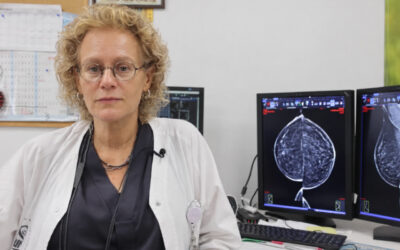
PinkStar & Mount Sinai Partnership to Advance Breast MRI Technology
A medical imaging startup first incubated within Sheba’s innovation ecosystem, PinkStar has entered an agreement with Mount Sinai Health System set to advance breast MRI protocols and support early cancer detection. The partnership marks PinkStar’s first collaboration with a U.S. academic medical institution.

Greek Ministry of Health Selects Sheba as Partner in Healthcare Transformation
The Greek Ministry of Health has chosen Sheba Medical Center to help advance healthcare across Greece, with a Memorandum of Understanding (MOU) between the parties signed in Athens on October 7, 2026.
