
The mission came at the direct request of Honduras’ President Nasry Asfura, who raised the country’s surgical backlog during a meeting with Israel’s Foreign Minister, Gideon Sa’ar, shortly before the former’s inauguration.
Carried out in coordination with the Embassy of Israel in Honduras, Israel’s Agency for International Development Cooperation (MASHAV), and the American Jewish Joint Distribution Committee (JDC), the visit reflects the kind of on-the-ground partnership SGO builds wherever a shortage of specialists stands between patients and treatable blindness.
Furthermore, the assistance provided by the delegation drew on the expertise and uncompromising standard of care unique to Sheba Medical Center, recently ranked seventh-best hospital in the world by Newsweek and one of the top hospitals in the world for the eighth consecutive year.
Restoring Sight, One Patient at a Time
At the San Felipe Hospital, the SGO team worked through a packed schedule of complex ophthalmological care, addressing conditions rooted in Honduras’s shortage of surgeons and equipment: glaucoma, cataracts, and other advanced eye conditions that had gone untreated for lack of specialist care. Representing Sheba’s Goldschleger Eye Institute were nurse Valerie Glutman, Senior Surgeon, Dr. Emmanuel Schwalb, plus Dr. Lital Smadar, and Dr. Nirit Bourla, who all worked side by side with San Felipe’s own medical staff throughout the mission.
Dr. Schwalb described how quickly that collaboration took hold: “Professional and personal ties were formed with the local medical team within a very short time.” He characterized the Honduran doctors and medical workers he worked alongside as dedicated and welcoming professionals throughout the visit.
Care Capacity Built to Outlast the Visit
The scores of intricate procedures performed were only one facet of the plan. The mission also donated medical equipment to its partner institution, intended to keep San Felipe’s surgical capacity intact long after SGO’s departure, along with clinical knowledge shared directly with local staff throughout the visit.
More is already scheduled to follow. Advanced glaucoma equipment is set to arrive in Honduras in August, with a second SGO delegation planned for November, this time paired with training for local emergency teams on responding to mass-casualty incidents.
Welcoming the wider contribution SGO is making to Honduran-Israeli bilateral relations, during the mission’s opening ceremony, Presidency Minister Juan Carlos García stated: “We are convinced that the partnership between the countries will continue to grow stronger, and we appreciate the commitment of our friends from Israel.”
More Posts

A Choice at 18, a Son at 44: How Sheba Restored Kassandra’s Fertility After 23 Years
At 18, before cancer treatment that could affect her fertility, Kassandra had portions of her ovarian tissue frozen, without knowing if medical science would ever advance enough to make parenthood possible for her. More than 23 years later, Prof. Dror Meirow, Director of the Fertility Preservation Center for Cancer Patients at Sheba Medical Center, and his team performed the transplant that eventually led to the birth of Kassandra’s son.

From Pilots to Clinical Practice: The Implementation of AI at Sheba
Sheba Medical Center is expanding the use of artificial intelligence across its departments, with AI systems already in active use in everyday clinical care. Sheba has also begun deploying a platform that gives clinicians access to medical literature and protocols at the point of care, while physicians remain responsible for medical decisions.
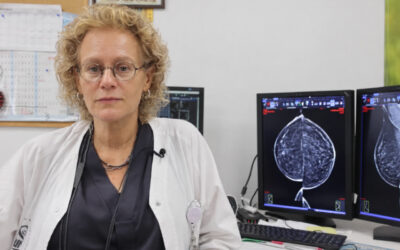
PinkStar & Mount Sinai Partnership to Advance Breast MRI Technology
A medical imaging startup first incubated within Sheba’s innovation ecosystem, PinkStar has entered an agreement with Mount Sinai Health System set to advance breast MRI protocols and support early cancer detection. The partnership marks PinkStar’s first collaboration with a U.S. academic medical institution.
