
Developed in collaboration with Sheba’s ARC AI Center and ScribeMD, SmartER addresses one of the most demanding environments in healthcare: emergency medicine.
Emergency departments operate under constant time pressure, high patient volume, and heavy documentation requirements. While digital health systems have improved data availability, they have also pushed physicians’ attention toward screens during patient encounters. SmartER was developed to reverse this tradeoff by transferring documentation and information management to ambient AI, allowing clinicians to focus on care delivery and communication.
How SmartER Works: Ambient AI at the Point of Care
Using AI-based ambient listening technology developed in collaboration with ScribeMD, a clinical AI company specializing in real-time medical documentation, SmartER listens to patient-physician conversations during the clinical encounter, transcribes them, and automatically generates structured medical summaries for physician review. This enables physicians to maintain eye contact, conduct examinations without interruption, and engage in continuous dialogue without the need for manual typing or real-time documentation.
At the conclusion of the visit, SmartER produces a comprehensive clinical summary, significantly reducing documentation burden and saving valuable time. The platform was designed as part of a broader patient-journey approach, supporting continuity of care from entry into the emergency department through clinical decision-making and discharge.
Dr. Avi Irony, Director of the Emergency Medicine Department at Sheba Medical Center, said:
“In emergency medicine, every minute matters, and information overload directly affects both care delivery and patient experience. Even in its initial deployment, SmartER is already making a difference. It allows us to begin each encounter with a complete clinical picture and manage the patient journey more efficiently, resulting in less time spent on screens and more time devoted to medicine.”
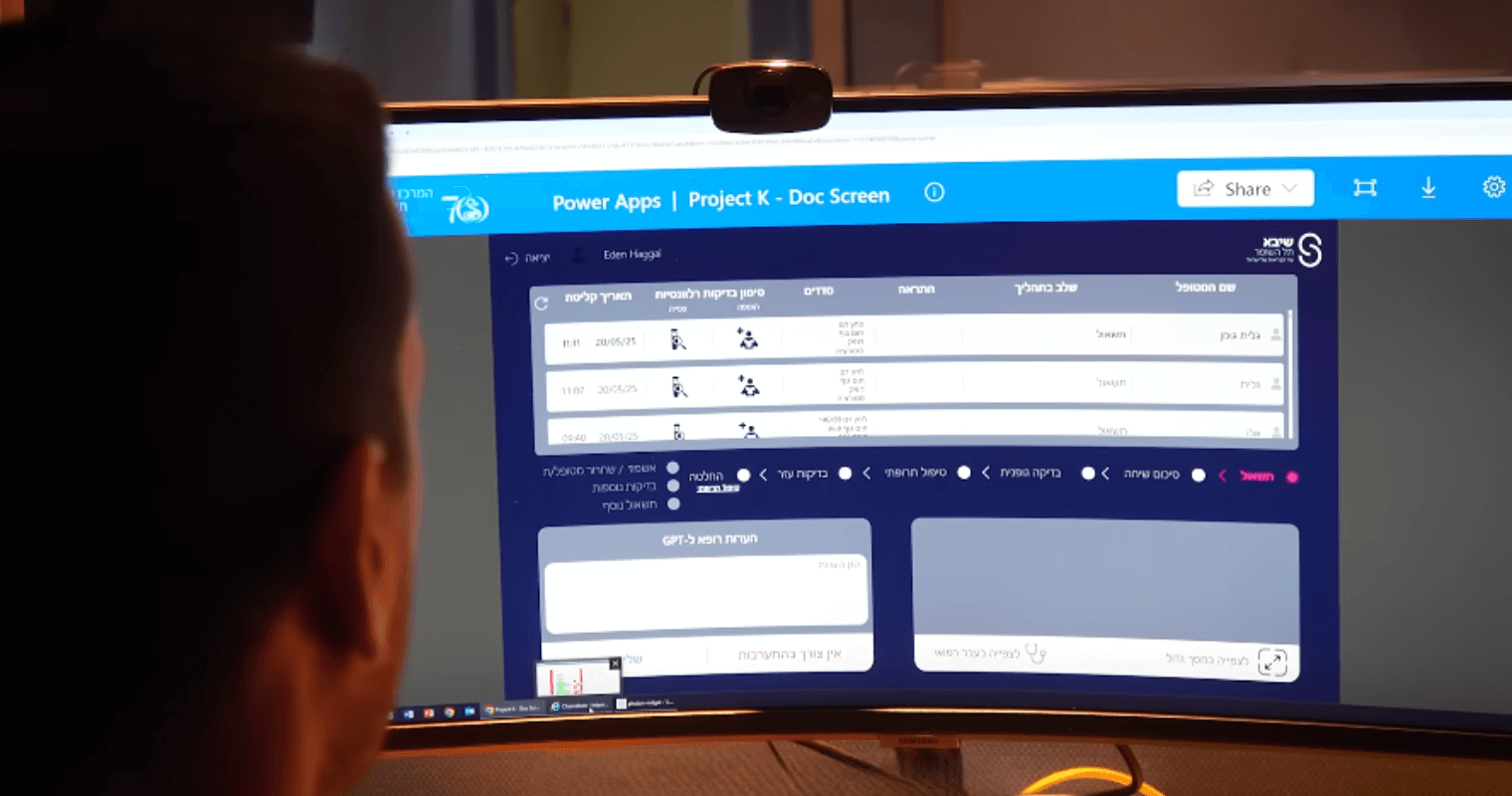
Streamlining the Patient Journey from Admission to Discharge
SmartER joins a growing ecosystem of AI tools embedded across Sheba Medical Center as part of its Smart-Hospital approach. These include Project K, Sheba’s first AI-powered emergency room for clinical decision support, and Aidoc, which provides AI-driven imaging analysis. Together, these systems reflect Sheba’s strategy of integrating AI directly into medical workflows.
Prof. Eyal Zimlichman, Chief Transformation, Innovation, and AI Officer, and Founder and Director of ARC at Sheba Medical Center, added:
“SmartER reflects ARC and Sheba’s broader approach of integrating AI as an infrastructure layer for modern healthcare. The real challenge in medical AI goes beyond the algorithm to integrating it into daily clinical workflows. SmartER was built to fit naturally into the emergency department, supporting care continuity without adding burden or compromising the human experience. With AI managing the information, physicians can focus fully on the patient.”
By embedding ambient AI into one of the most complex clinical settings, Sheba Medical Center continues to set global standards for how technology can enhance efficiency, improve patient experience, and preserve the human connection at the heart of medicine.
More Posts

Transforming Mental Healthcare Through Video-Based Staff Training
Aggressive behavior remains one of the greatest challenges in inpatient child mental healthcare, affecting patients, families, and healthcare professionals alike. Research from Sheba Medical Center, recognized by Newsweek among the World’s Best Hospitals, demonstrates how structured video-based debriefing can transform real clinical encounters into opportunities for continuous learning, helping teams strengthen their confidence, decision-making, and approach to managing aggression.

The Cognitive & Behavioral Neurology Unit’s Approach to Alzheimer’s Diagnosis
Prof. Ramit Ravona-Springer leads a team working to make Alzheimer’s diagnosis more precise, both by identifying where existing blood tests fall short and by using technology to better detect subtle early symptoms.

From Research to Real-World Eye Care: Michael Belkin & the Belkin Vision Story
Prof. Michael Belkin, an ophthalmologist and inventor at Sheba Medical Center, shows how Sheba’s research ecosystem turns ophthalmology ideas into real clinical tools. From ExPRESS to DSLT and CureSight, his innovations reflect Sheba’s model of combining clinical care, science, and device development. It is a clear example of how translational research can move from concept to practice.
