
Scientific understanding of how ovarian aging influences health across the body remains incomplete. OASIS, short for Ovarian Secretome and Integrated Health Span, will investigate biological changes during the menopausal transition and their relationship to women’s longer-term health.
Ovarian Aging and Whole-Body Health
Statistically, women live longer on average than men, but understanding their health as they age requires closer attention to the menopausal transition. OASIS will examine how ovarian aging relates to changes in cardiovascular, bone, cognitive and metabolic health, alongside sleep, body composition and physical function.
Because these changes occur in tandem with a shift in the ovaries’ role, researchers believe they could offer early clues about why certain health risks rise for middle-aged women. Very little is known, however, about what actually takes place in the ovaries during the transition, which makes it hard to pinpoint who would benefit from clinical support and when.
“It’s not a single event, it’s a multi-system impact on the entire woman’s body, and so we’re trying to understand how these changes in the ovary are going to impact downstream chronic conditions,” Prof. Petrick, Director of the Center for Metabolomics and Molecular Phenotyping at Sheba, explains. OASIS was designed to fill in that missing picture.
Following Women Through the Change
Through Sheba’s Longevity Center, clinical researchers will “take 650 women before they hit menopause, during their menopausal transition, and all the way to their post-menopausal years,” explains Dr. Goshen, Director of the Healthy Longevity Research Institute and Co-Founder of the Sheba Longevity Institute. Earlier research has tended to examine isolated health outcomes either before or after menopause, but OASIS will track women through the transition itself, capturing what happens biologically at each stage.
Alongside detailed clinical evaluations, the researchers will use in-depth molecular testing to connect what is happening in the ovaries with changes throughout the body. For Dr. Goshen, the breadth of those evaluations is what sets the study apart. “One of the unique strengths of OASIS is the depth of the clinical phenotyping. By combining measures of ovarian aging, including ovarian ultrasound, with detailed longitudinal assessment of cognition, sleep, bone, cardiovascular and metabolic health, body composition and physical function, we can study ovarian aging as a whole-body process rather than an isolated reproductive event. Our goal is to identify the earliest measurable changes in women’s health and ultimately create tools that allow us to recognize women at risk before significant functional decline or disease develops.”
From Biomarkers to Earlier Intervention
The researchers want to pinpoint when the biological changes linked to ovarian aging first emerge, and how closely they track with the functioning of other systems in the body. Just as important is whether women at risk can be recognized before disease or physical decline takes hold.
The answers could translate into practical tools. One goal is a way to flag women likely to reach menopause early. Another is a means of assessing and predicting a woman’s health across her lifespan. The team also hopes to uncover biological mechanisms that could become targets for new therapies, extending the years women spend in optimal health.
For Prof. Petrick, the key to building the needed tools is combining the power of AI with advanced molecular analysis. “While every woman goes through menopause, our understanding of the biological changes that unfold during ovarian aging remains strikingly limited. By combining artificial intelligence with advanced multi-omics, we are building non-invasive tools to predict ovarian aging and identify key biomarkers that signal rapid decline. This research lays the foundation for targeted interventions that can protect and support women’s health long before age-related symptoms appear.”
The efforts to reach this goal will draw on the expertise of several of Prof. Petrick and Dr. Goshen’s colleagues as well. Prof. Uri Alon, a specialist in systems biology and the dynamics of aging, and proteomics expert Prof. Tamar Geiger will lend their scientific insight from the Weizmann Institute of Science. At Sheba, lead gynecologist Prof. Jaron Rabinovici and Prof. Tzipora Strauss, Director and Founder of the Sheba Longevity Center, are set to oversee the clinical and translational side of the research. Together, the team will connect systems biology and molecular research with detailed clinical assessment.
Investing in Women’s Health
This crucial endeavor is supported by Nuttall Women’s Health, a philanthropic organization founded by Amie and Scott Nuttall to fund research. It backs ambitious, large-scale projects that target the biggest unanswered questions in the field, with a flexible model designed to move ideas from concept to reality quickly. For its CEO, Dr. Michal Elovitz, OASIS fits that mission. “A major limitation in improving women’s health is the lack of understanding of female biology. Women’s health declines dramatically with menopause, and yet we still do not know what the ovary actually produces once it is devoid of eggs. Understanding ovarian aging and its systemic effects will create new opportunities for therapies that could positively impact women for a significant portion of their lives. We are proud to support Drs. Petrick and Goshen’s OASIS study and are eager to see its impact.”
At Sheba, ranked #7 among Newsweek’s World’s Best Hospitals, OASIS joins clinical care and research toward a goal that reaches well beyond Israel: earlier, more targeted interventions that help women everywhere age in better health.
More Posts

A Global Standard for Patient-Centered Care: Sheba Becomes First in Israel to Earn ICHOM Accreditation
Sheba Medical Center is the first in Israel to earn ICHOM accreditation, awarded for its program measuring prostate cancer treatment outcomes by a standard used worldwide. Patients report how they feel and function through questionnaires completed at multiple time points before and after treatment, and during follow up. Based on their responses, real-time alerts notify the care team when follow-up or intervention may be needed.
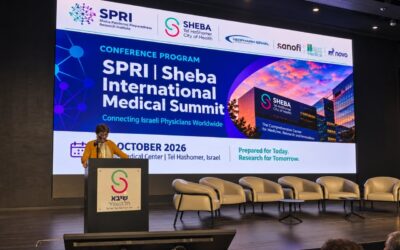
SPRI Summit 2026: Prepared for Today, Research for Tomorrow
Sheba Medical Center hosted the SPRI International Medical Summit on Sunday, October 25, 2026, connecting Israeli physicians worldwide through a program spanning pandemic preparedness, medical innovation and clinical research.

Sheba Medical Center Launches Free AI Chat for Cancer-Related Questions
The new 24/7 service offers patients and families access to cancer-related information based on a medically validated knowledge base, in multiple languages, as part of Sheba’s broader work in AI and digital health.
