
Sheba’s ARC Innovation Center: Transforming Healthcare on a Global Scale
Consistently ranked by Newsweek among the World’s Best Hospitals, Sheba Medical Center recognized that healthcare requires a shift. Instead of viewing the hospital as a single site of care, Sheba envisioned a City of Health—a dynamic ecosystem where prediction, prevention, and rehabilitation merge with innovation, research, and collaboration across sectors. This vision led to the creation of the ARC (Accelerate, Redesign, Collaborate) Innovation Center, founded and led by Prof. Eyal Zimlichman, Chief Transformation Officer, Chief Innovation Officer and Chief AI Officer at Sheba Medical Center.
The Story Behind Sheba’s ARC
When asked about ARC’s origins in his recent NEJM Catalyst interview, Prof. Zimlichman explained that ARC was built with two main goals in mind:
- To ensure that innovation drives large-scale transformation globally, addressing some of the most pressing challenges in healthcare today, including workforce shortages, financial pressures, and environmental sustainability.
- To redefine healthcare as an economic engine, transforming it from a perceived cost or burden into a driver of growth that generates value for patients, providers, and societies alike.
To achieve these goals, as Prof. Zimlichman explains, ARC developed a structured approach based on four principles: focusing on digital health, embedding innovation within institutions, building a global ecosystem, and ensuring scalability across diverse health systems.

That same year, ARC marked two additional milestones, as two of its homegrown startups reached landmark exits: Innovalve Bio Medical Ltd, acquired by Edwards Lifesciences, and Belkin Vision, acquired by Alcon Pharmaceuticals. Together with ARC’s broader commercialization efforts—from company spin-outs to strategic partnerships—these exits underscore the financial viability of ARC and reinforce its role as an engine of healthcare transformation.
Prof. Zimlichman highlighted ARC’s scale, noting that it now employs 160 full-time staff, making it “probably the largest innovation center in any hospital in the world.” This growth, he explained, is sustained by revenues generated through commercialization and successful exits, which are reinvested into ARC’s platform, creating a cycle that continuously fuels expansion and impact. In 2025, for example, Sheba leveraged earnings to establish a new AI Center within its campus, adding 60 AI specialists dedicated to reshaping hospital operations and patient care.

Scaling Innovation Through Global Partnerships and Education
ARC’s success has not gone unnoticed. Institutions worldwide are seeking to replicate its model, and through its partnership with Deloitte, Sheba’s ARC is now establishing innovation centers in London, Berlin, Singapore, Australia, Canada, and the United States. These centers form a collaborative global network where best practices, technologies, and implementation insights are shared.
Beyond technology and start-ups, ARC is deeply committed to developing people. Its SPARC program (Sheba Entrepreneurship Program & ARC) has already trained more than 1,000 clinicians in entrepreneurship, while a dedicated MBA program in collaboration with Israel’s top business school is shaping the next generation of leaders in healthcare innovation. Many alumni are now leading transformation efforts worldwide, including within ARC centers themselves.

The Future of ARC and Healthcare Innovation
As Sheba’s ARC continues to grow and evolve, its focus on innovation, collaboration, and scalability will remain at the forefront. By addressing key challenges like workforce shortages and financial sustainability, ARC has become a core driver of Sheba’s transformation into a smart hospital. Sheba’s achievement of 10th place in Newsweek’s 2025 “Best Smart Hospitals” global ranking is a testament to ARC’s global leadership in healthcare excellence.
To read the full NEJM Catalyst interview with Prof. Eyal Zimlichman, click here.
More Posts

A Choice at 18, a Son at 44: How Sheba Restored Kassandra’s Fertility After 23 Years
At 18, before cancer treatment that could affect her fertility, Kassandra had portions of her ovarian tissue frozen, without knowing if medical science would ever advance enough to make parenthood possible for her. More than 23 years later, Prof. Dror Meirow, Director of the Fertility Preservation Center for Cancer Patients at Sheba Medical Center, and his team performed the transplant that eventually led to the birth of Kassandra’s son.

From Pilots to Clinical Practice: The Implementation of AI at Sheba
Sheba Medical Center is expanding the use of artificial intelligence across its departments, with AI systems already in active use in everyday clinical care. Sheba has also begun deploying a platform that gives clinicians access to medical literature and protocols at the point of care, while physicians remain responsible for medical decisions.
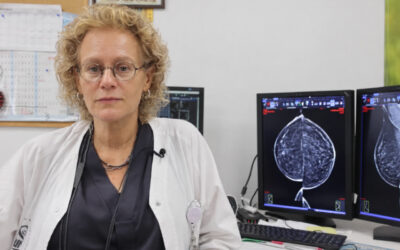
PinkStar & Mount Sinai Partnership to Advance Breast MRI Technology
A medical imaging startup first incubated within Sheba’s innovation ecosystem, PinkStar has entered an agreement with Mount Sinai Health System set to advance breast MRI protocols and support early cancer detection. The partnership marks PinkStar’s first collaboration with a U.S. academic medical institution.
